
Reviewed · POLYNESIAN CULTURE TOURS
Moorea : Safari Nature and Culture Tour with local guide
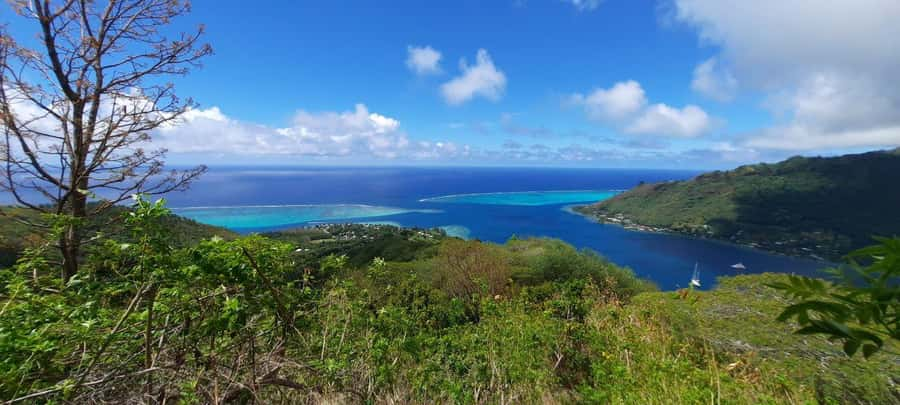
Moorea’s past comes alive through a virtual reality reconstruction of a marae ceremony and a naval battle in the bay. That unusual touch turns an archaeological site from scattered stones into a place with people, ritual, and movement. Local guide Christine leads the day in English or French, mixing island stories with stops at Moorea’s best viewpoints.
I like the way the tour joins culture with scenery rather than treating them as separate subjects. I also like the small group limit of eight, which gives you a better chance to ask about plants, missionaries, legends, and daily life. The main drawback is pace: four hours covers a lot of ground, so the archaeological walk and scenic stops are introductions rather than long, quiet visits.
Key points
- VR at Opunohu: See a 17th-century marae ceremony and naval battle with headsets supplied on site.
- Christine’s local storytelling: Expect explanations about Polynesian history, traditions, plants, myths, and legends.
- A full Moorea circuit: Toatea, Cook’s Bay, Opunohu Bay, the forest, pineapple fields, Belvedere, and a distillery stop all fit into four hours.
- Agriculture with a view: The route includes a stop near an agricultural school and varied crops, with Bali Hai as a backdrop.
- Small-group transport: Groups are limited to eight, with hotel pickup and drop-off included.
- Best for active sightseers: You need comfortable shoes and enough mobility for a forest crossing and a 45-minute walk.
Why Moorea’s past works better in virtual reality
Many island tours point at a marae and offer a few dates. This one tries to show you what happened there. At the Opunohu archaeological site, you put on a VR headset and see a reconstructed ceremony in a marae, along with a naval battle in the bay.
That matters because Polynesian archaeological sites can be hard to read at first glance. A stone platform, foundation, or terrace may be important, but its original purpose is not always obvious. The digital scenes give the site a human scale. You can connect the physical remains with ceremony, community, and conflict.
The equipment is provided on site, and the reconstructions have scientific support from the Department of Culture. That does not make the experience a museum lecture. It gives Christine a useful visual tool while she explains the setting and the people who used it.
The VR segment is the tour’s most distinctive feature, but it is not the entire point. You still walk through the actual archaeological area, hear local myths and legends, and look at the surrounding valleys. The technology works best as a bridge between evidence and imagination, not as a replacement for the real place.
More Cultural Tours in Moorea:
- Polynesian culinary experience
★ 5.0 · 137 reviews - Land and Sea cultural tour to discover traditions, heritage and the lagoon
★ 4.5 · 24 reviews - Authentic Polynesian Experience
★ 5.0 · 491 reviews
Meeting Moorea at Toatea Lookout
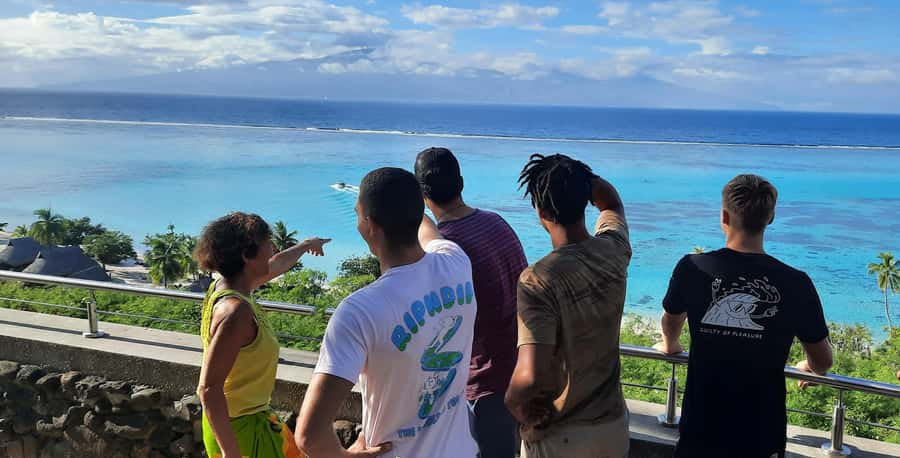
Hotel pickup begins the half-day outing, with Moorea-Maiao listed as the pickup area. Your first stop is Toatea Lookout, where you have about 20 minutes for photographs and a first look at the coral reef.
This is a sensible opening. You get your bearings before the tour turns toward stories of voyaging, settlement, and island life. Bring your camera, but do not spend the whole stop framing the perfect image. The point is also to see how the reef, bays, and mountain interior fit together.
The stop is short, so you should expect a viewpoint rather than a long walk. If you prefer slow photography or want time alone at every scenic point, the schedule may feel brisk. For a four-hour tour, though, it gives you a useful start without using up too much of the morning.
Cook’s Bay and the first navigators
At Cook’s Bay, Christine spends about 25 minutes explaining the first navigators who reached Tahiti and Moorea. The stop combines a guided talk with views across one of Moorea’s famous bays.
This is where the tour begins to place the scenery into a wider Polynesian story. Moorea is not only a pretty island viewed from the road. It is part of a much larger network of ocean travel, settlement, exchange, and cultural memory.
The bay stop is also a good test of what you want from this excursion. If you are looking for a beach day or a boat trip, this is not that. If you want context for the island you are seeing from a rental car or resort, the explanation adds useful meaning.
Opunohu Bay, forest roads, and island agriculture
The route continues through Opunohu Bay, with another photo stop and guided explanation lasting about 25 minutes. From there, the vehicle heads through tropical forest and across a river toward the center of the island’s crater.
A scenic drive follows for roughly 35 minutes. Along the way, you see mountain views, pineapple fields, and agricultural areas. One especially worthwhile stop is connected with an agricultural school, where you can see varied crops with Bali Hai in the background. The focus is not just on what grows here, but also on how plant products have been used through Polynesian history.
That detail gives the drive more purpose. You are not simply passing green slopes behind a vehicle window. You are learning how food, plants, and practical knowledge fit into island life. A tasting is included during this part of the outing, with fruit and juice mentioned among the included refreshments.
You should expect a road-based view rather than a farm work session. The agricultural stop is valuable because Christine explains the uses of plants, but the exact amount of time spent at each growing area can vary with the four-hour schedule.
More 4WD Safaris in Moorea:
- Moorea: Half-Day Open-Air 4WD Safari with Hotel Transfers
★ 4.6 · 240 reviews - ALBERT TOURS: Excursion 4×4 safari with private SWING view point
★ 4.5 · 138 reviews - TOUR Safari 4X4
★ 4.5 · 37 reviews - Moorea:4X4 safari excursion between land and sea with lunch
★ 4.7 · 28 reviews
Walking into the Opunohu archaeological site
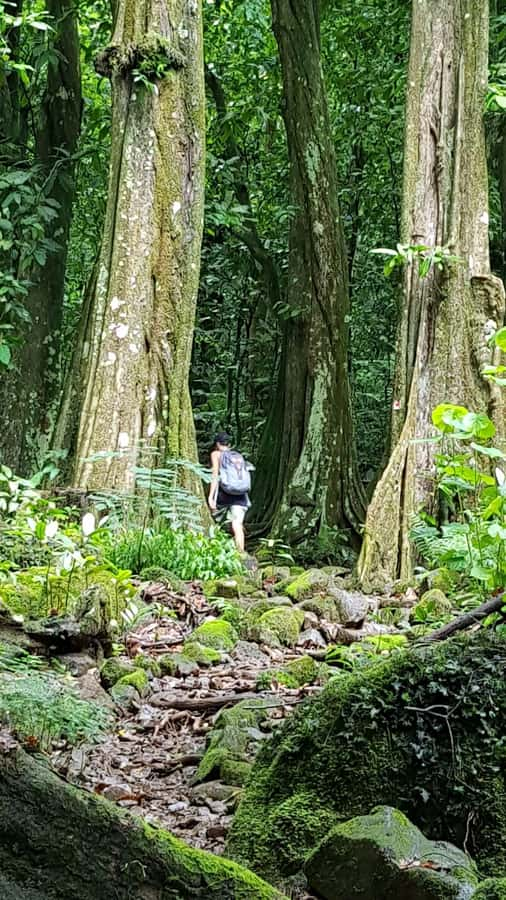
The main walking section lasts about 45 minutes. You cross a river and reach the Opunohu archaeological area, where the tour looks at the first Polynesians and the remains of an ancient village.
This is the part that rewards proper footwear. Comfortable shoes are specifically recommended, and you should carry water and insect repellent. The route includes a forest walk, so light clothing and practical shoes will serve you better than resort sandals.
The site itself gives the tour its strongest cultural focus. Christine explains what you are seeing, then uses the VR equipment to help reconstruct a 17th-century ceremony in a marae. A marae was a ceremonial place, and seeing it in use helps you understand why the stone remains matter.
The virtual naval battle adds another layer. Moorea’s bays were not only scenic places. They were part of the island’s political and military story. Seeing action in the bay through the headset connects the archaeological site with the wider setting around you.
You should not expect a long archaeological excavation tour or a full museum experience. The visit is compact, and the walk is one section of a much larger route. Still, it is the most memorable part for anyone who wants culture rather than viewpoints alone.
Christine’s approach to Moorea’s culture
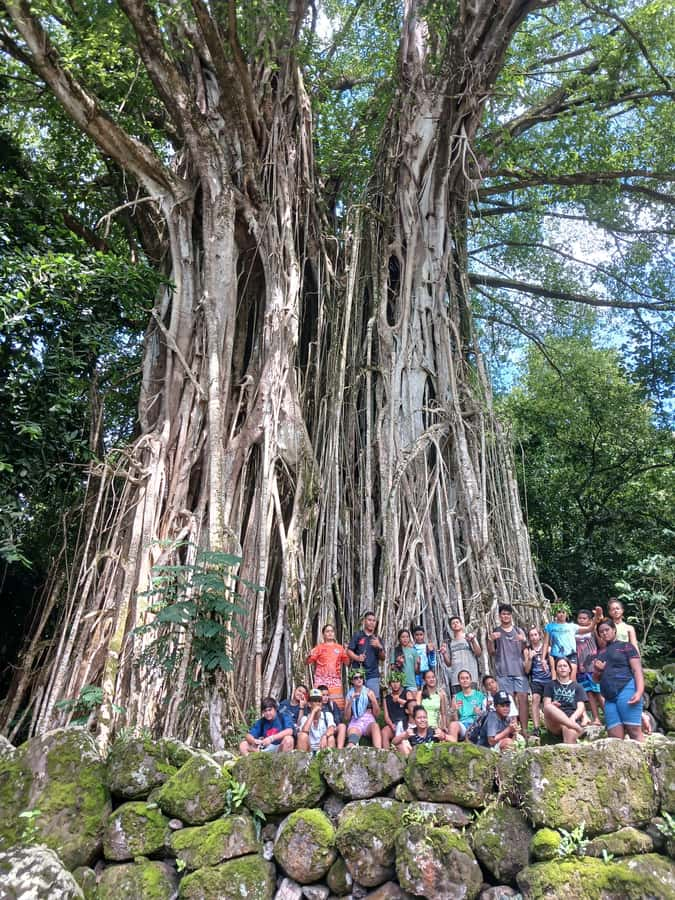
Christine is the guide most closely associated with this experience. Her explanations cover Moorea’s history, Polynesian traditions, myths, legends, plants, and missionary period. The strongest praise focuses on her patience, warmth, communication, and personal connection to the island.
That matters on a culture tour. A guide can list dates and names, or help you see how those facts connect with land, food, belief, and family life. Christine’s style appears to lean toward the second approach. You can ask questions, and the tour is designed for conversation rather than a speech delivered from the front of a large bus.
The language options are English and French. If you speak either language, you should be able to follow the guided portions directly. The group is limited to eight participants, which is a real advantage at the archaeological site and during tastings. It also reduces the chance that your questions disappear into a crowd.
The Belvedere and Moorea’s two bays
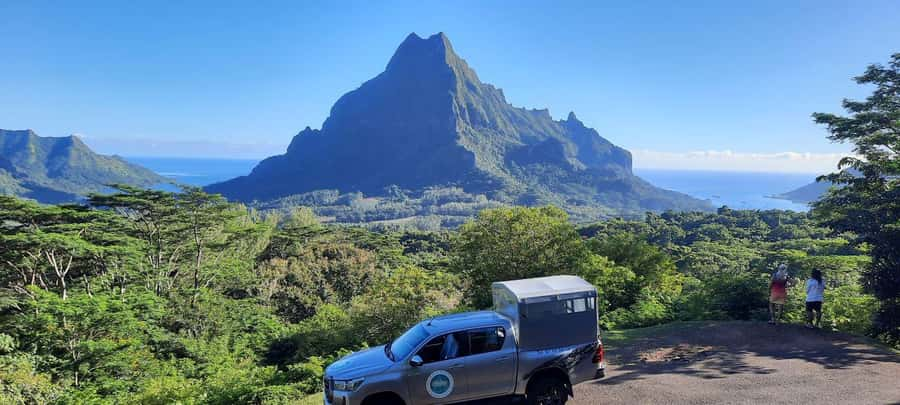
After the archaeological walk, the route heads to Belvedere Lookout. You have about 15 minutes for photographs and views toward Moorea’s two bays.
This is one of the island’s classic panoramas, but its value increases after the earlier stops. You have already seen Cook’s Bay and Opunohu Bay from lower viewpoints. From Belvedere, you can compare their shapes and positions while the guide ties the scenery back to the island’s settlement and travel routes.
Again, the time is limited. Fifteen minutes is enough to look, take photographs, and hear a short explanation. It is not enough for a long pause or an extended hike. Keep your camera ready and listen while you have the chance.
Missionaries, temples, and the final tasting
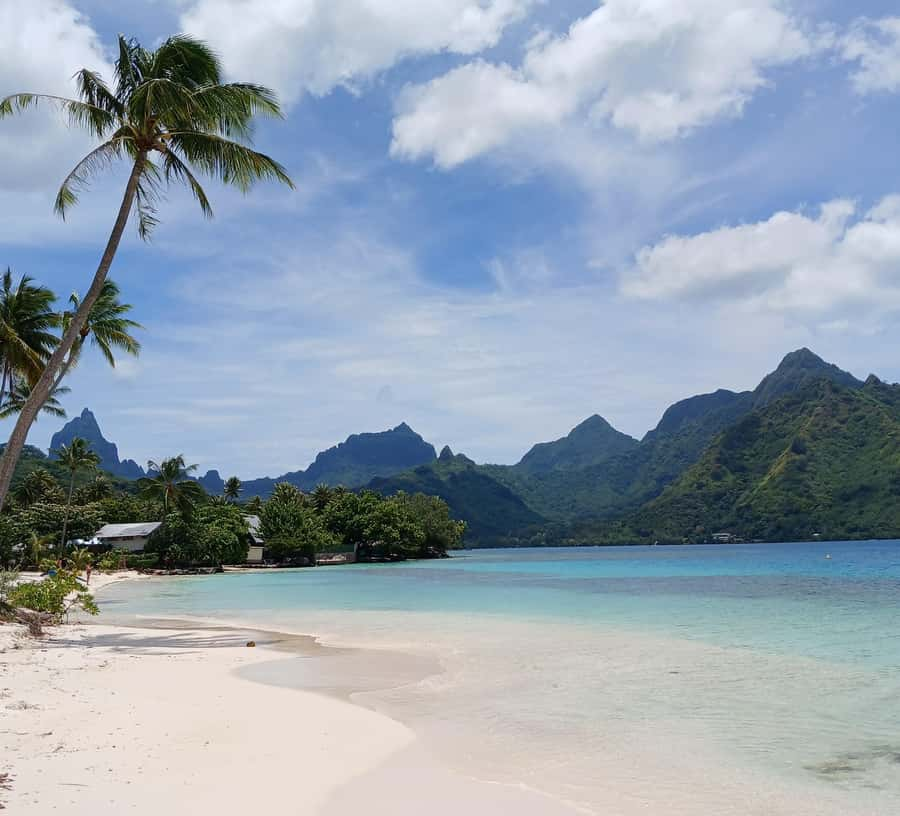
Moorea’s story changed in the early 19th century with the arrival of the first Protestant and Catholic missionaries. The tour includes explanations of this period and visits connected with the island’s temples.
This section is important because it moves beyond the ancient village and shows a later turning point in local religious and social life. The tour does not present Moorea as frozen in the past. It follows the island through different periods, from early Polynesian settlement to missionary influence and modern agriculture.
The final stop is at Rotui Juice Factory and Distillery, with about 20 minutes for a break, shopping, and tasting. The included refreshments are described as tropical fruit juices, punch, and local beer, while the itinerary also lists a tasting stop. The half-day tour does not include a meal, so do not arrive expecting lunch.
This is a pleasant ending, but it is also the most commercial part of the day. If you enjoy trying local drinks or want something to take home, you will find it useful. If you prefer the archaeological and cultural sections, treat it as a short closing stop rather than a major attraction.
Is $117 a fair price for four hours?
At $117 per person, this is not the cheapest way to see Moorea’s viewpoints. You are paying for more than transport, though. The price includes hotel pickup and drop-off, a live guide, the VR equipment, fruit and juice tastings, and a tightly planned route around the island.
The value is strongest if you want several subjects in one morning: scenery, voyaging history, archaeology, agriculture, missionary history, and local drinks. Arranging all those stops independently could take more time and require your own transport. The small group limit also makes the price easier to justify than a large coach outing.
The value is weaker if you mainly want long photo stops or a relaxed forest walk. The route covers many locations, so each stop has a fixed window. You are buying variety and interpretation, not unhurried time at one site.
The tour has a 5.0 rating based on 27 ratings, and the strongest praise centers on Christine’s explanations and the way she brings Moorea’s culture to life. That is the part I would prioritize when judging the price. The scenery is free to look at, but a strong local guide changes how much you understand about it.
Who should book this Moorea tour?
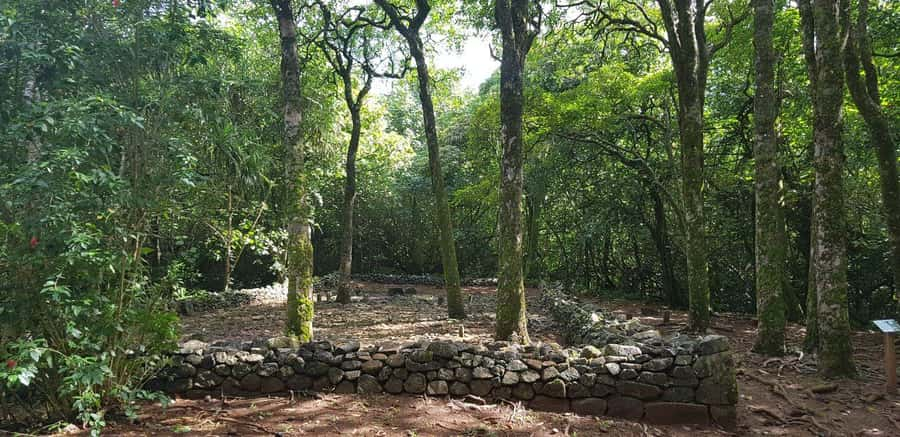
I would recommend it to you if you want an active cultural introduction to the island in one half-day. It suits first-time visitors who want an overview before spending later time at the beach, on the water, or at a resort.
It is also a good choice for anyone curious about archaeology but not eager to spend hours reading signs. The VR reconstructions make the Opunohu site easier to picture, while Christine supplies the local context.
The tour is less suitable if you need a wheelchair-accessible route, have significant back problems, or cannot manage a forest walk and river crossing. It is not suitable for children under five, babies under one, pregnant women, or people with mobility impairments. The booking information also gives age restrictions for people over 70 and over 80, so older participants should confirm eligibility before paying.
Wear comfortable clothes and shoes, bring water, insect repellent, and a camera. Since food is not included, plan to eat before or after the tour.
Cancellation is flexible up to 24 hours before the start for a full refund, and you can reserve now and pay later. Starting times vary, so check availability for the date you want.
Should you book it?
Book this tour if you want Moorea explained, not simply photographed. The combination of Christine’s personal storytelling, the Opunohu archaeology, and the VR scenes gives the morning a clear purpose. The agricultural stop and missionary history also make it broader than a standard viewpoint circuit.
Skip it if you want a slow day, a meal, or a single focused activity. Four hours moves quickly, and the route includes several short stops. For most active visitors who want culture, scenery, and practical island context in one outing, the price is reasonable and the format makes good use of limited vacation time.
FAQ
How long is the Moorea Safari Nature and Culture Tour?
The tour lasts four hours, including hotel pickup and drop-off and the stops around Moorea.
Is hotel transportation included?
Yes. Hotel pickup and drop-off are included within the Moorea-Maiao pickup area.
What languages does the guide speak?
The live tour is offered in English and French.
What happens during the virtual reality section?
At the Opunohu archaeological site, you use supplied VR headsets to view reconstructions of a 17th-century marae ceremony and a naval battle in the bay.
Is food included?
No meal is included. Fruit and juice tasting is included, and the final distillery stop offers tropical juices, punch, and local beer as described for the experience.
Is the tour suitable for people with mobility limitations?
No. The activity is listed as unsuitable for wheelchair users and people with mobility impairments or back problems. It includes a forest walk, a river crossing, and about 45 minutes at the archaeological site.
Just added around Moorea
- Moorea Highlights Private Tour: Natural and Cultural Attraction★ 5.0 · 7 reviews
- moorea tubing★ 5.0 · 12 reviews
- Yoga at sunrise at Sofitel Moorea, overlooking Tahiti★ 5.0 · 3 reviews
- Whale Watching Moorea (non-swimming)★ 4.0 · 12 reviews
- Watch and Swim with Humpback Whales in Moorea★ 5.0 · 3 reviews
- Snorkeling Tour in Moorea Aquatic Adventure Half Day★ 5.0 · 4 reviews
- Snorkeling Safari Moorea (Half Day Tour)★ 5.0 · 3 reviews
- Unique photo shoot in the heart DE Moorea: Beach & mountain combo★ 5.0 · 3 reviews
Polynesian Culture Tours, compared.
SHARED FULL DAY CULTURAL & LAGOON TOUR – Bora Bora Cultural Lagoon Tour
Read our review →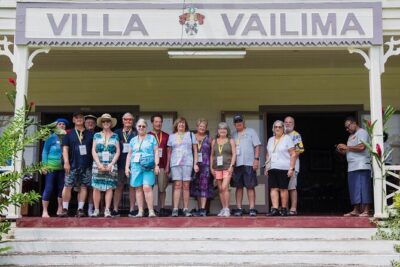
Apia Highlights Shore Excursion Tour + Lunch & Island Show
Read our review →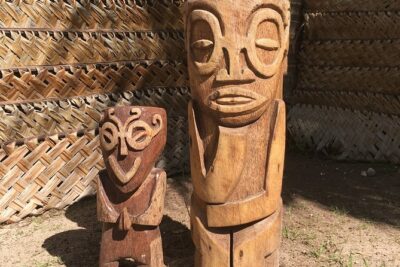
Land and Sea cultural tour to discover traditions, heritage and the lagoon
Read our review →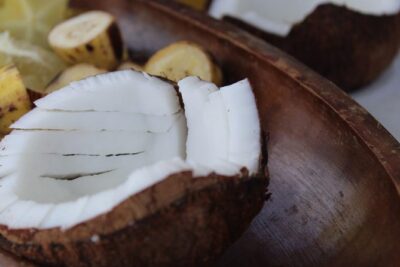
PRIVATE FULL DAY CULTURAL & LAGOON TOUR – Bora bora Cultural Lagoon Tour
Read our review →Browse the lists this tour appears in