
Reviewed · POLYNESIAN CULTURE TOURS
Polynesian culinary experience
The most interesting part of this Moorea experience is that you do not simply watch a chef prepare lunch. In Paopao Valley, beside pineapple fields and mountain peaks, you help turn local ingredients into a full Polynesian meal while learning how food connects to island history, farming, and daily life. Audrey and Stevenson lead the class in a working culinary space beside their gardens and production laboratory.
I like the hands-on format, and I like the way the class reaches beyond recipes into plant identification, traditional cooking methods, and the changes Polynesian society is facing today. The main consideration is practical: the $99 price does not include transportation or alcohol, so you must make your own way to the meeting point and should expect a morning built around cooking, not sightseeing by vehicle.
Key points to know before booking
- Pineapple fields and mountain views: The class takes place in Paopao Valley, among gardens, fields, and Moorea’s dramatic peaks.
- A full Polynesian meal: You may prepare poisson cru, coconut bread cooked in leaves, grilled tuna, sauces, breadfruit, coconut chips, and a pumpkin tapioca dessert.
- More than a cooking lesson: Audrey and Stevenson explain local agriculture, history, cultural traditions, imported foods, and modern changes on the islands.
- Private group format: Only your group participates, making it easier to ask questions and take an active role in the cooking.
- Three and a half hours at a relaxed pace: The morning begins at 9:00 a.m. and includes coffee or tea, snacks, lunch, and all fees.
- Useful take-home value: Recipes are provided, and some participants have had enough food left over for another meal.
Cooking beneath Moorea’s mountain peaks
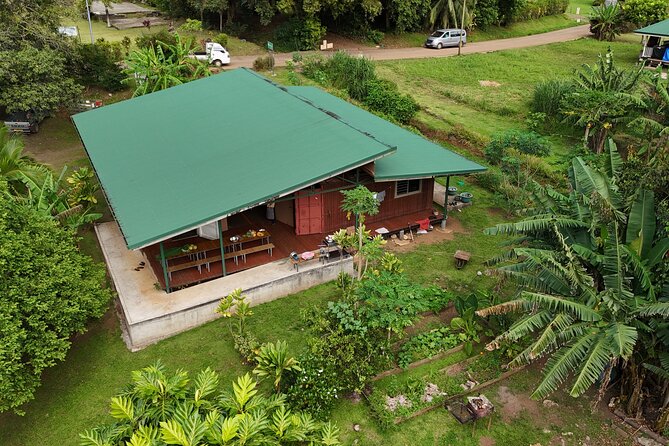
Food&CookLab sits in the heart of Paopao Valley, a setting that gives the class its sense of place before the cooking even begins. Pineapple fields, growing gardens, and Moorea’s jagged peaks form the backdrop. This is not a generic cooking studio placed anywhere in the South Pacific. The ingredients, setting, and stories are tied to the valley.
You meet at F5MG+32W in Moorea-Maiao at 9:00 a.m. The experience lasts about three and a half hours and returns you to the same meeting point. Since no air-conditioned vehicle is included, plan your route before class. The booking uses a mobile ticket, and the activity is private, so only your group takes part.
The facility itself is designed for workshops and culinary training. It sits next to a production laboratory, which gives the experience a working feel rather than the atmosphere of a restaurant demonstration. You are there to take part, not just sit at a counter while somebody else does all the work.
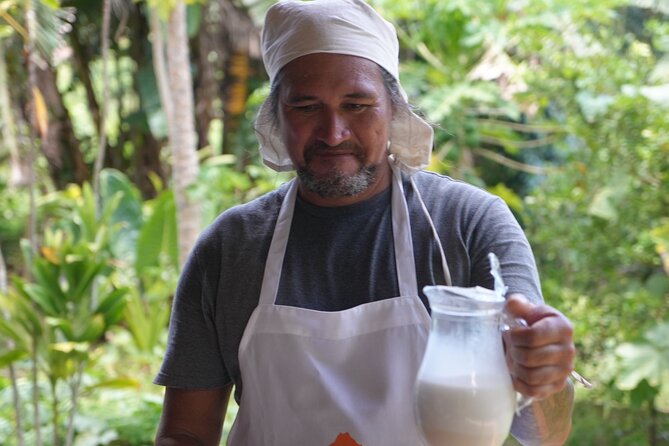
The hosts, Audrey and Stevenson, guide the session together. Their teaching covers both the practical side of Polynesian food and the larger story behind it. You learn which ingredients are grown locally, which are seasonal, which are imported, and how people make use of what is available on an island.
More Cultural Tours in Moorea:
- Moorea : Safari Nature and Culture Tour with local guide
★ 5.0 · 27 reviews - Land and Sea cultural tour to discover traditions, heritage and the lagoon
★ 4.5 · 24 reviews - Authentic Polynesian Experience
★ 5.0 · 491 reviews
A garden lesson before the knives come out
One useful feature of the morning is the time spent looking at the gardens. You learn to identify different plants and see the resources growing around the cooking space. That matters in Polynesia, where food traditions developed around local crops, fruit, fish, leaves, roots, and the need to use ingredients carefully.
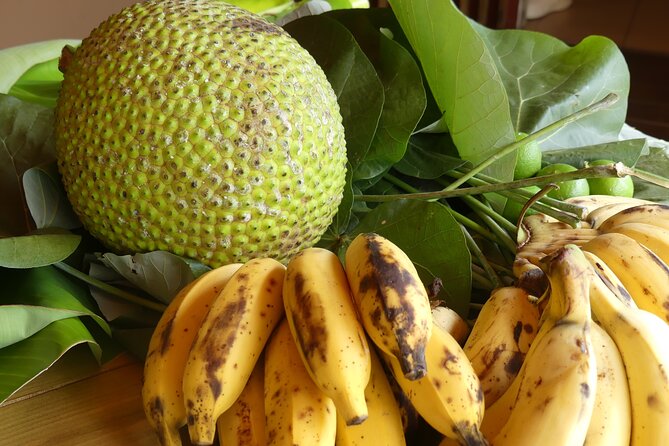
The garden visit also keeps the class from becoming a list of disconnected recipes. When you later handle coconut, banana leaves, breadfruit, or vegetables, you have already seen part of their setting and heard why they matter. The connection between garden and table is clear.
Audrey and Stevenson also place food in a wider cultural frame. You hear about Polynesian history, the traditional way of living, and changes taking place in Polynesian society today. The discussion is not separate from the meal. It explains why certain foods are cooked in particular ways and how local habits have adapted over time.
The pace is relaxed and social. You are given a role in the preparation, so the morning does not depend on watching one person work. That makes this a good choice if you enjoy asking questions, handling ingredients, and learning by doing. If you prefer a short demonstration with little participation, the format may feel more involved than you want.
Building a Polynesian meal by hand
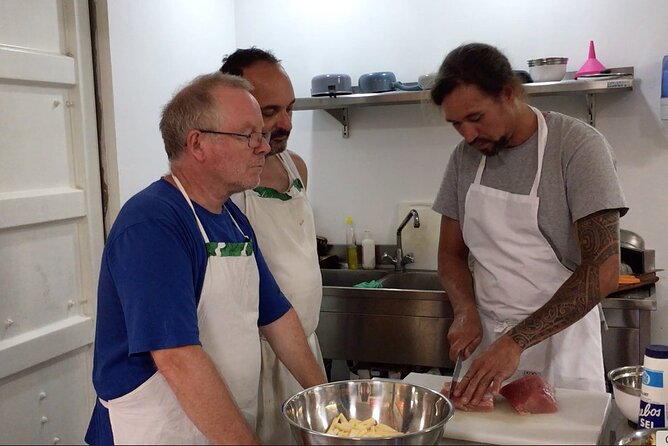
The exact menu can vary, but the dishes described for the class show a generous range of Polynesian cooking. You may learn to prepare poisson cru, the familiar raw tuna dish mixed with local ingredients, along with other foods that reveal more of the island kitchen.
A typical selection has included:
- Poisson cru
- Fresh coconut bread baked inside a leaf
- Coconut chips
- Grilled or barbecued tuna
- Two homemade sauces or glazes for the tuna
- Roasted breadfruit
- A pumpkin and tapioca dessert wrapped in a banana leaf
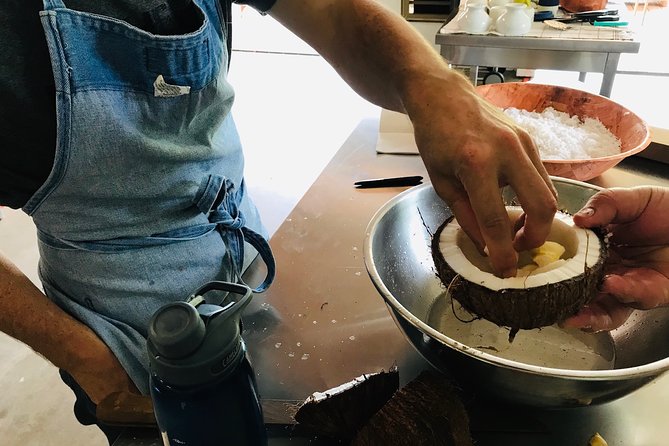
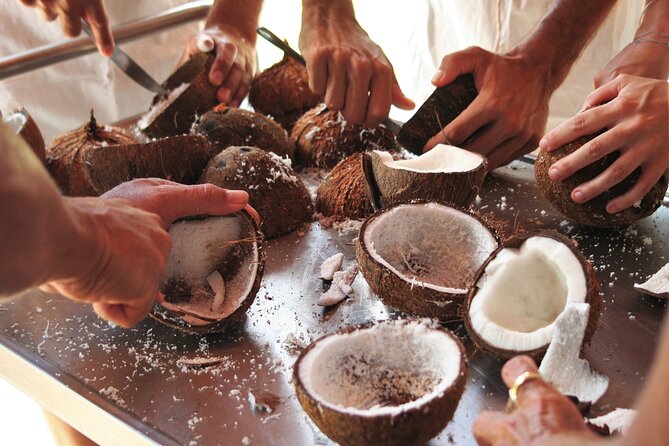
This combination gives you several cooking techniques in one sitting. You work with raw fish, shape bread, prepare sauces, use leaves as cooking wrappers, roast produce, and finish with a sweet dish. You also see how coconut appears in different forms, from bread and chips to sauces and other local preparations.
The tuna is especially tied to the island setting. The class has used fresh line-caught red tuna, then shown participants how to carve it for poisson cru and how to cook it over a barbecue. That contrast is useful. You learn that the same fish can be handled in very different ways, each with its own texture and flavor.
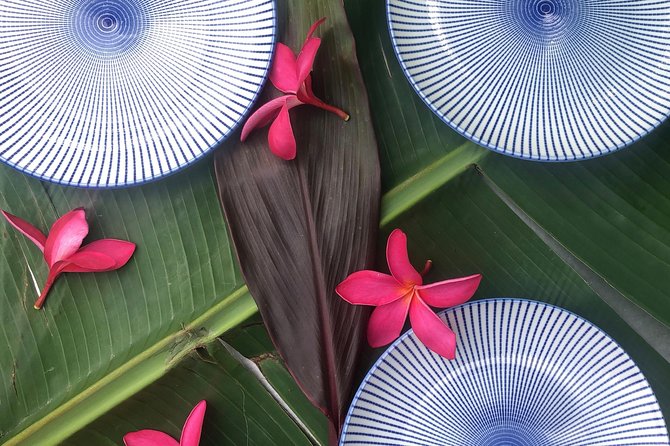
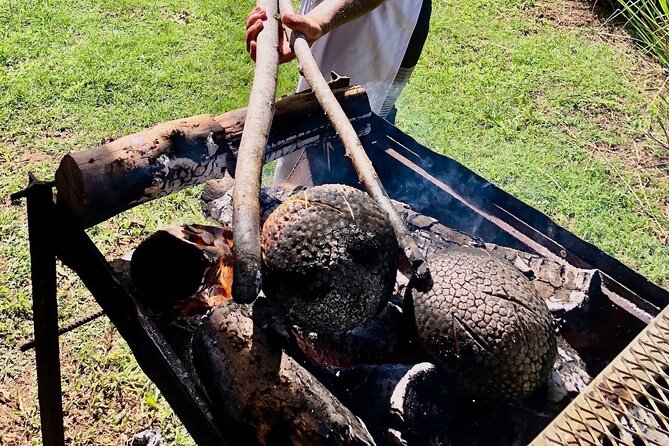
Banana leaves are not just decoration. They act as practical cooking tools and connect the food to older island methods. Preparing coconut bread and the pumpkin tapioca dessert inside leaves shows how traditional cooks used materials close at hand. It is one of the more memorable skills to recreate at home, provided you can find suitable ingredients and leaves.
The meal also goes beyond the best-known Polynesian dish. Poisson cru is part of the lesson, but you may also work with breadfruit, pumpkin, tapioca, coconut, fresh vegetables, and sauces. If you want to understand the range of local cooking rather than simply taste one signature plate, that variety adds real value.
From preparation to a shared lunch
After the cooking is finished, everyone sits down to eat the meal together. Audrey and Stevenson join you, turning lunch into part of the cultural exchange rather than a final plate handed over at the end.
The food is served as the result of your morning’s work. That changes the way you notice it. You know which ingredients came from the garden, which steps required care, and how the local techniques shaped the final dishes. The meal becomes a lesson you can taste.
Coffee or tea, snacks, and lunch are included in the $99 price. Alcoholic drinks are not included, so this is not designed as a wine-pairing class or a long restaurant lunch. It is a daytime food and culture experience built around local dishes.
Portions appear to be generous. Some participants have left with enough food for another meal that evening. That is not something you should treat as guaranteed, since portions and attendance can vary, but it is worth knowing if you are comparing this class with a short tasting session.
The shared table is also where the class becomes most personal. You have time to talk with Audrey and Stevenson about their work, their backgrounds, and the community. The tone is family-friendly and informal, with a laid-back pace rather than a rushed schedule.
A few more Moorea half days to weigh up
- Moorea 6-Hour Snorkeling and Lunch Shared Tour
★ 5.0 · 1,758 reviews - Moorea 4WD Tour Inc. Belvedere, Pineapple Farm, Magic Mountain…
★ 5.0 · 967 reviews - Snorkeling excursion, discovery of the lagoon, small group.
★ 5.0 · 861 reviews - Franckyfranck Tours Moorea – Half day Tours
★ 5.0 · 817 reviews
Why the cultural context adds value
A cooking class can be enjoyable without explaining much. This one aims to show how food reflects the island itself. You learn about what people grow, how they cook it, what is native, what is seasonal, and what comes from elsewhere.
That information is useful during the rest of your time in French Polynesia. It gives you more context when you see local produce at a market or encounter poisson cru on a restaurant menu. You begin to recognize that an island meal is shaped by supply, season, tradition, and outside influence all at once.
The class also addresses how Polynesian society is changing. That makes the experience more than a backward-looking presentation of old customs. You are introduced to traditions, but also to the present-day realities behind them and to the work involved in keeping local food practices meaningful.
The hosts’ teaching style seems central to the experience. Audrey has described an interest in the educational side of the class, and the program is organized so that everyone has a part. You should expect discussion throughout the preparation, not a silent kitchen lesson.
What $99 means in practical terms
At $99 per person, this is not the cheapest way to eat lunch in Moorea. It is also not simply a meal. The price covers about three and a half hours, a private class, food preparation, coffee or tea, snacks, lunch, all fees and taxes, and recipes to use at home.
The value is strongest if you would otherwise pay for several separate activities: a cultural talk, a garden visit, a cooking lesson, and a substantial local meal. You receive all of those elements in one morning, with direct instruction and a personal connection to the hosts.
The cost is less compelling if you mainly want to sample prepared food or fill a spare hour. You will spend much of the session chopping, mixing, shaping, wrapping, and cooking. That is the point, but it requires active participation.
The private format helps justify the price. Only your group takes part, so the class is not built around a large audience. You can ask about ingredients, cooking methods, food customs, or substitutions without waiting for a crowded group to move on.
Vegetarians can also ask about accommodations. A vegetarian menu has been arranged for at least one participant, so the hosts have shown flexibility. Still, you should raise dietary needs when booking rather than assume every dish can be changed at the last moment.
Who will enjoy this most
I would choose this experience if you want a cultural activity with substance and enjoy food as a way to understand a place. It suits couples, families, friends, honeymooners, and solo visitors who like joining a small, active group.
It also works well for people who have already spent plenty of time on beaches and in the water. Moorea offers hiking, snorkeling, and scenic outings, but this class gives you a different view of the island. You spend the morning learning how local food is grown, prepared, and shared.
Families may appreciate the range of tasks and the relaxed pace. A mother and daughter enjoyed learning together, and a 92-year-old participant took part with his family. That does not provide a formal accessibility guarantee, but it suggests the hosts can create a welcoming experience for different generations.
You should think twice if you dislike cooking, have very limited time, or expect air-conditioned transport. The class begins promptly at 9:00 a.m., ends back at the meeting point, and does not include alcoholic drinks or a vehicle.
Service animals are allowed. The booking confirmation is provided at the time of booking, and the activity is available as a mobile ticket.
Planning the morning without a vehicle
Because transportation is not included, the meeting point deserves attention before you reserve. The start location is F5MG+32W, Moorea-Maiao, French Polynesia, and the activity ends there.
This is an easy detail to overlook when planning island activities. You should allow enough time to reach Paopao Valley for the 9:00 a.m. start, especially if you are staying elsewhere on Moorea. The experience is private, so arriving late could affect a session arranged for your group.
The booking has free cancellation up to 24 hours before the start time for a full refund. Cancellations or changes made less than 24 hours before the start are not accepted for a refund, and the cut-off follows local time.
Should you book the Food&CookLab class?
Book it if you want to meet local hosts, cook a full Polynesian meal, learn how garden ingredients are used, and leave with recipes rather than just photographs. Audrey and Stevenson combine food preparation with history, agriculture, and everyday culture, and the setting among pineapple fields gives the morning a strong sense of place.
The class is especially good early in your Moorea stay. It can help you understand local ingredients and food traditions before you encounter them elsewhere on the island. The meal, hands-on work, and private format make the $99 price reasonable for people who value participation.
Skip it if you want a passive tasting, included transport, or a short activity between other bookings. For everyone else, this is a thoughtful way to trade a few hours of beach time for a full plate, useful skills, and a better understanding of Moorea’s food culture.
FAQ
Where does the Polynesian cooking experience take place?
It takes place at Food&CookLab in Paopao Valley, Moorea, at F5MG+32W, Moorea-Maiao, French Polynesia.
What time does the class begin?
The experience begins at 9:00 a.m.
How long does the activity last?
The cooking experience lasts approximately three hours and 30 minutes.
Is transportation included?
No. An air-conditioned vehicle is not included, and you must arrange your own transportation to the meeting point.
What food and drinks are included?
The price includes coffee or tea, snacks, and lunch, along with all fees and taxes. Alcoholic beverages are not included.
Is the activity private?
Yes. Only your group participates in the activity.
Can I cancel for a full refund?
Yes. You can cancel at least 24 hours before the experience start time for a full refund. Cancellations or changes made less than 24 hours before the start are not accepted for a refund.
Just added around Moorea
- Moorea Highlights Private Tour: Natural and Cultural Attraction★ 5.0 · 7 reviews
- moorea tubing★ 5.0 · 12 reviews
- Whale Watching Moorea (non-swimming)★ 4.0 · 12 reviews
- Watch and Swim with Humpback Whales in Moorea★ 5.0 · 3 reviews
- Yoga at sunrise at Sofitel Moorea, overlooking Tahiti★ 5.0 · 3 reviews
- Unique photo shoot in the heart DE Moorea: Beach & mountain combo★ 5.0 · 3 reviews
- Snorkeling Tour in Moorea Aquatic Adventure Half Day★ 5.0 · 4 reviews
- Snorkeling Safari Moorea (Half Day Tour)★ 5.0 · 3 reviews
Polynesian Culture Tours, compared.
SHARED FULL DAY CULTURAL & LAGOON TOUR – Bora Bora Cultural Lagoon Tour
Read our review →
Apia Highlights Shore Excursion Tour + Lunch & Island Show
Read our review →
Safari Nature and Culture Tour with local guide
Read our review →
Land and Sea cultural tour to discover traditions, heritage and the lagoon
Read our review →
PRIVATE FULL DAY CULTURAL & LAGOON TOUR – Bora bora Cultural Lagoon Tour
Read our review →Browse the lists this tour appears in