
Reviewed · WHALE WATCHING
4 Hours of Humpback Whale Watching in Tahiti
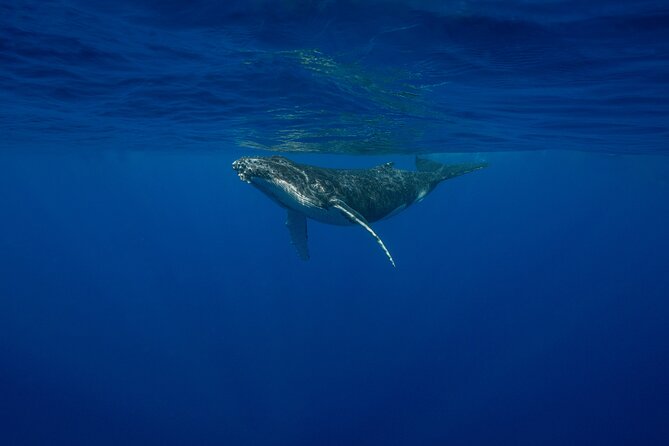
Tahiti’s humpback whales are the main event, but the hydrophone gives this outing an extra sense of wonder. You may hear whale song before you get a clear look at the animal, then watch blows, tails, or a mother and calf from the boat. I like the small maximum group of 12 and the calm, careful approach to wildlife.
I also like that the guides work with marine biologists and local conservation groups. Luo is praised for clear explanations and personal help, while Julien and Bastien are also named for strong guiding. The catch is simple: whale sightings and water entries are never guaranteed, and rough seas, sharks, or whale behavior may keep you aboard.
Key things to know before booking
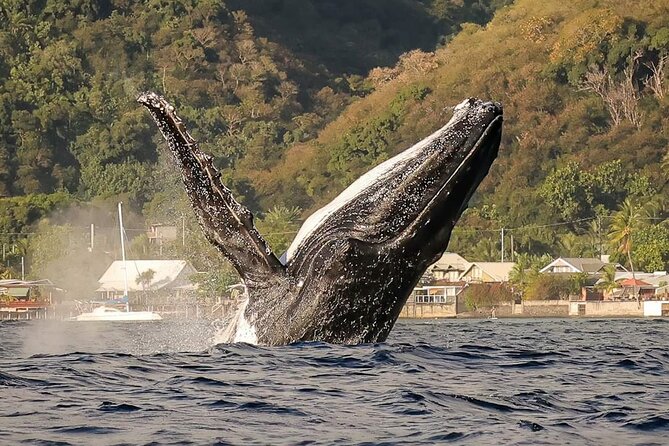
- Four hours on the ocean: You have time to search rather than rush through a short wildlife encounter.
- Small group of up to 12: The spacious boat should give you more room to watch and listen.
- Boat viewing comes first: Snorkeling is considered only after the guides assess the whales and sea conditions.
- Hydrophone on board: You may hear humpback song beneath the surface.
- Wildlife remains unpredictable: Dolphins, turtles, and other cetaceans are possible, but no animal encounter is promised.
- Children under 10 stay on the boat: The child rate applies, but young children do not enter the water.
Why this Tahiti whale trip feels different
A humpback whale excursion is not a show with a fixed schedule. You leave Puna’auia and search open water, guided by animal behavior, weather, and sea conditions. That uncertainty is part of the bargain, and it is worth understanding before you pay for the trip.
The strongest feature here is the guide-led interpretation. The naturalist on board explains whale behavior and decides how close the boat may approach. The goal is not simply to find a whale, but to watch without pushing the animal into a stressful encounter.
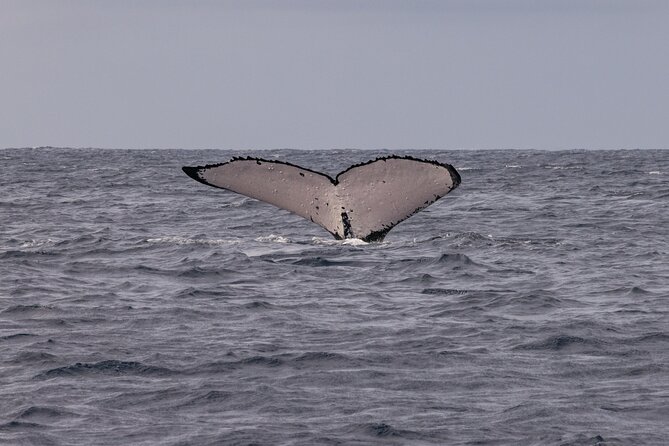
That matters in Tahiti, where the best moment may not be a dramatic breach beside the boat. A distant blow, a slow back, a tail disappearing below the surface, or a calf traveling near its mother can still be a meaningful sighting. The guides are expected to help you read those small signs.
The group size helps. With a maximum of 12 people, you are not sharing the boat with a large crowd. You should have a better chance of hearing the guide, moving to a viewing position, and using the hydrophone without the noise of a packed excursion.
More Whale Watching Tours in Tahiti
- Respectful whale excursion to Tahiti in 4h30
★ 4.5 · 123 reviews - Tahiti island: Whale watching Experience
★ 4.2 · 79 reviews - Guided Small Group Whale Watching and Swim Tour Tahiti
★ 5.0 · 57 reviews
Leaving Puna’auia and getting the briefing
The meeting point is at C97M+HW in Puna’auia, and the activity returns there after about four hours. The exact meeting instructions should be checked carefully after booking, since the location is supplied as a map code rather than a named dock in the information provided.
Your outing begins with a full briefing. Expect an explanation of humpback whales, their environment, approach rules, and the conditions that affect a water entry. This is not filler. It tells you why the boat may wait, move away, or abandon the idea of snorkeling.
The guide has the final say throughout the trip. Even if a whale appears close enough for an exciting photograph, the crew must judge whether the animal is calm, whether the sea is safe, and whether entering the water would be respectful. That rule can disappoint someone hoping for a guaranteed swim, but it is the right rule for a wild animal encounter.
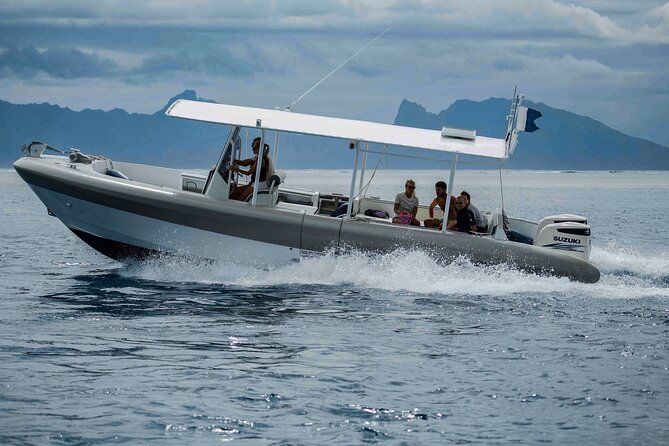
The boat is described as spacious, which should make four hours more comfortable than a cramped ride. Still, you are spending most of the morning or afternoon at sea, and a moderate level of physical fitness is expected. If you are prone to seasickness or find choppy water difficult, this is a point to weigh seriously.
Searching for humpback whales from the boat
Once the briefing is over, the crew searches the ocean. The initial observation is always from the boat, not in the water. This lets the guide assess the whales before considering any closer encounter.
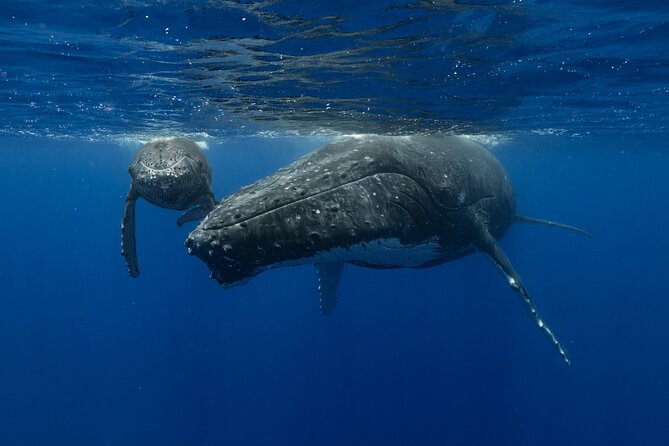
The search itself can take time. One outing involved several hours looking for whales before the group found a mother and calf, while another reached multiple groups, including a trio with mothers and young. These different outcomes show the honest range of a wildlife trip.
At the better end, you may see several blows, a whale swimming near the surface, a tail, or a mother with her calf. A mother and young whale can be especially memorable because their movements are easier to connect as a pair. At the less rewarding end, you may see whales from a distance after a long search.
The guides keep analyzing behavior as the boat moves. This is where a naturalist makes a real difference. A person who knows what to watch can help you distinguish a whale that is traveling from one that may remain in an area, and can explain why the boat does not simply race toward every sighting.
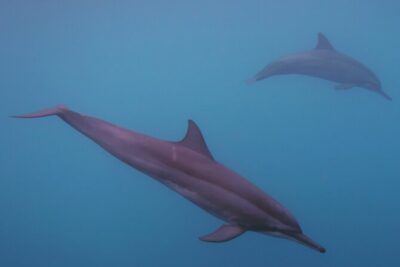
Dolphins, other cetaceans, and sea turtles are also possible. They are extra possibilities, not promised parts of the route. You should book this for humpback whale watching, then treat other animals as a welcome bonus.
The hydrophone and the value of listening
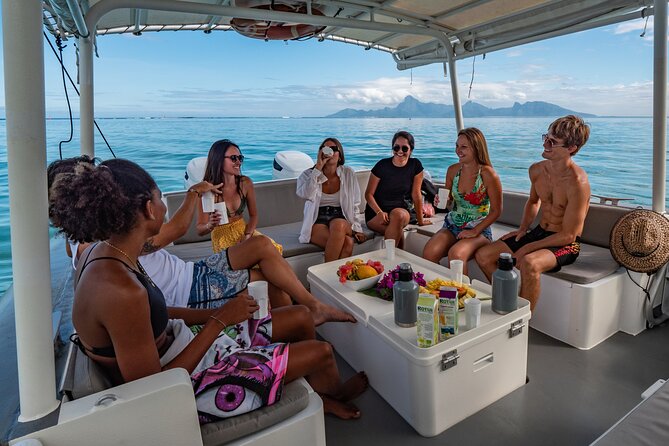
The boat carries a hydrophone, allowing you to listen to whale song. This is one of the most appealing details for anyone who wants more than a quick photograph.
Whale song changes the mood of the trip. From the boat, you may first see only a blow or a dark shape. Through the hydrophone, the whale can feel present even when it is below the surface and out of sight. The sound also gives the guide another way to explain what makes humpback behavior so remarkable.
You should not expect the hydrophone to guarantee a performance. The animals remain wild, and the quality of what you hear can depend on location and conditions. Still, it adds a strong educational element and gives the four-hour outing more substance when whales are not immediately beside the boat.
I particularly like this feature for people who value observation over spectacle. It encourages you to pay attention to the whole ocean, not only to wait for a breach.
Same water, a completely different kind of day:
- 5 Hours Tahiti Island Tour – West and East Coast
★ 5.0 · 1,020 reviews - Crossing Island of Tahiti 4×4 Mountain, Waterfall, River, Basins
★ 4.5 · 532 reviews - Découvrez le Mana durant la traversée de Tahiti en 4×4 Safari
★ 5.0 · 456 reviews - Unique Tahiti Tour – personalised, small group east coast tour
★ 4.5 · 314 reviews
When snorkeling is possible, and when it is not
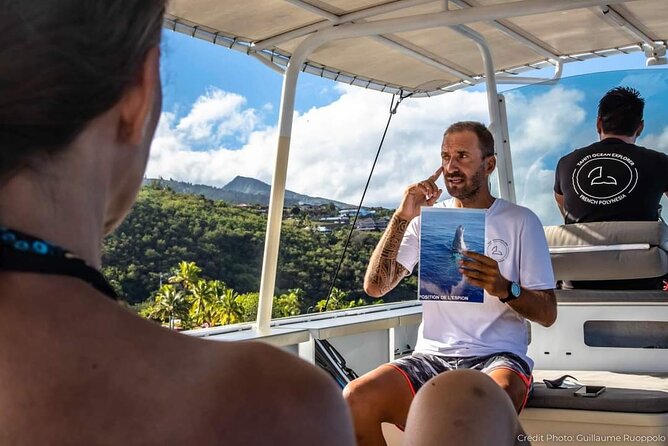
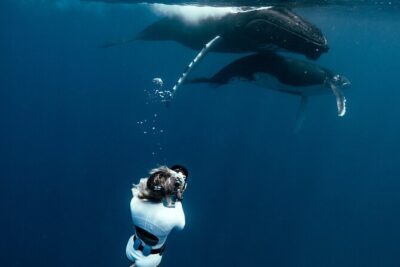
If whale behavior and sea conditions allow, the guide may offer observation in the water. This is optional, and it is never automatic. Boat viewing must come first, and the naturalist decides if a launch is appropriate.
You need snorkeling experience to choose this option. The requirement is important because open-water conditions can be demanding, especially around large animals and a moving boat. The activity is not presented as a beginner lesson.
Safety can end the water portion even after whales have been found. One outing could not enter the water because five large predatory sharks were circling the boat. That is frustrating if you booked with a swim in mind, but it also shows why the crew must retain full control of the decision.
A water encounter should be viewed as a possible addition, not the product you are buying. If your main aim is to swim with whales, you may find the uncertainty difficult. If you are happy watching from the boat and would welcome a carefully judged water entry, the arrangement is more sensible.
Children under 10 receive the child rate, but their observation is by boat only. Families should explain this clearly before booking so a child does not arrive expecting to snorkel beside the whales.
The guides make the difference
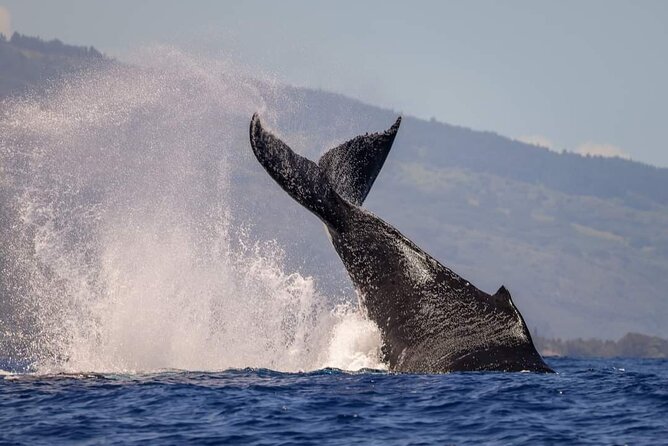
The strongest praise goes to the guiding team. Luo, also referred to as Lou in one account, is singled out for friendly explanations, practical help, and making sure people have chances to see and photograph the whales. That kind of attention matters on a boat, where a few seconds can be the difference between a clear sighting and an empty patch of sea.
Julien and Bastien are also named positively, along with the captain. The important point is not a scripted presentation. It is the combination of searching skill, whale interpretation, and judgment about when to approach and when to hold back.
Because the group is small, you should be able to ask questions during the outing. The guide’s role includes explaining the animals and their environment, not just pointing toward a blow. The experience is therefore a good fit if you want context along with photographs.
The conservation connection adds weight. The operator works with local cetacean conservation associations and marine biologists, with observations contributing to scientific knowledge. That does not turn your four-hour trip into a research expedition, but it gives the wildlife rules a clear purpose.
Choppy water, missed expectations, and the honest trade-off
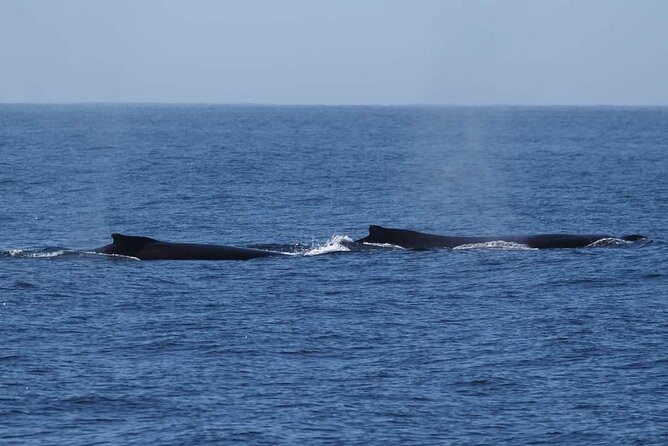
The main drawback is that nature controls the schedule. One outing involved choppy water and a long search, with the best sighting helped by information from another boat. That kind of day can feel poor value if you expected whales close to the vessel.
The operator’s response to that concern also clarified that everyone aboard had paid for a place, despite an impression that some people were friends of the local crew. The practical lesson is to judge the excursion by its structure and wildlife conditions, not by assumptions about who is on the boat.
The four-hour duration cuts both ways. It gives the crew time to keep searching, which is useful when whales are scattered. It also means more time exposed to movement on the sea if conditions are rough.
Some people will find that patience rewarding. Others may prefer a shorter, more predictable boat ride. There is no way to remove the central risk: even a skilled crew cannot order a whale to surface, stay nearby, or accept a water encounter.
Is the $127.54 price fair?
At $127.54 per person, this is not a casual sightseeing ride. The value depends on what you want from a whale trip.
The price is easier to justify if you care about a small group, a spacious boat, naturalist interpretation, conservation-minded approach, and the hydrophone. You are paying for about four hours of searching, not a quick pass along the coast. The possible snorkeling encounter also gives the outing more range, though it should not be counted as guaranteed value.
The price is harder to justify if your priority is a certain close-up whale swim. The boat may spend much of the time searching, and the guide may decide against entering the water. A strong sighting is possible, including mothers and calves, but wildlife remains the deciding factor.
The high overall rating and 92 percent recommendation suggest that most people find the experience worthwhile, but the less successful outings are important to keep in mind. I would book it for the quality of the process, not as a promise of a perfect photograph.
Who should book this experience?
I would recommend it to confident swimmers who enjoy marine wildlife and can accept changing plans. It also suits people who prefer a smaller boat group and want an informed guide rather than a basic ride with little explanation.
It is a good choice for photographers, but only if you understand that whales may surface far away or move quickly. Bring patience as part of your equipment.
Families can book, with a clear limit: children under 10 observe from the boat only. Anyone with limited physical fitness should consider the moderate fitness requirement and the possibility of choppy water before committing.
I would hesitate to recommend it to someone who dislikes open-water motion, needs a guaranteed swim, or has only a narrow window in Tahiti and cannot tolerate a wildlife trip that produces distant sightings.
Booking 61 days ahead is the average pattern, so planning early is sensible, especially if your schedule is tight. Confirmation arrives within 48 hours, subject to availability. Free cancellation is available up to 24 hours before the start time. If poor weather cancels the trip, you are offered another date or a full refund. The same applies if the minimum number of participants is not reached.
Should you book the Tahiti whale watch?
Book it if you want a careful, guide-led search for humpback whales, with the chance to hear whale song and possibly observe in the water. Luo, Julien, and Bastien are associated with the warm, attentive guiding that makes a difference when sightings are brief.
Skip it if you need a guaranteed close encounter or cannot handle rough water and waiting. My practical advice is to treat boat viewing as the complete experience, then consider snorkeling a bonus. With that expectation, the small group, conservation focus, hydrophone, and four hours on the ocean make this a strong choice for a serious Tahiti wildlife outing.
FAQ
How long is the whale-watching experience?
The activity lasts approximately four hours and ends back at the meeting point in Puna’auia.
Where does the tour start?
It starts at C97M+HW in Puna’auia, French Polynesia, and returns to that same meeting point.
Are whale sightings guaranteed?
No. Whale observation and water entries are not guaranteed or systematic. The crew searches for whales, but sightings depend on wildlife and sea conditions.
Is snorkeling included for everyone?
No. Whales are first observed from the boat. Entering the water is considered only if whale behavior and sea conditions allow it, and snorkeling experience is mandatory. Children under 10 observe only from the boat.
What other animals might I see?
You may see dolphins, other cetaceans, or sea turtles during the ocean trip. These sightings are possible but not guaranteed.
What happens if weather cancels the trip?
If poor weather causes cancellation, you are offered a different date or a full refund. Free cancellation is also available when you cancel at least 24 hours before the experience start time.
Just added around Tahiti
- Small group snorkeling (5 people max): wrecks & tropical fishes at 3:30pm★ 5.0 · 7 reviews
- Whale Watching Activity★ 5.0 · 8 reviews
- Taxi Boat to Watch the Teahupoo International Surfing Competition★ 4.5 · 13 reviews
- Teahupoo Olympic Wave Journey★ 5.0 · 6 reviews
- Wholesale Fishing in Poti Marara at Tahiti Teahupoo Peninsula★ 5.0 · 4 reviews
- Tahiti Full Day Private Coastal Tour★ 5.0 · 16 reviews
- SURF TAHITI Bites & Waves – Surf experience with every bite★ 5.0 · 7 reviews
- Sunset sailing trip on the Lagoon of Tahiti★ 5.0 · 5 reviews
Whale Watching, compared.
Swimming with Whales in Moorea (Half Day tour)
Read our review →
Humpback whale watching and marine life in Moorea
Read our review →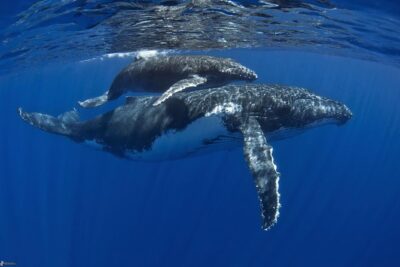
Private tour observing and swimming with humpback whales in Moorea
Read our review →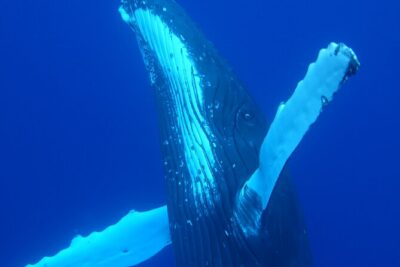
Browse the lists this tour appears in