
Reviewed · ISLAND TOURS
Tongatapu Island Tour
Tongatapu’s best sights are scattered across the island, and this tour links them in one long, useful circuit. You’ll see royal Tonga, ancient stonework, Pacific coastal power, fruit bats, a tsunami-carried boulder, and a freshwater cave pool in about five hours.
I like the wide range of stops, especially the Ha’amonga’a Maui trilithon and Mapu’a ‘a Vaea Blowholes. I also like that Anahulu Cave entry, hotel pickup, and port pickup are included. The main drawback is the pace: fifteen stops leave only a few minutes at many sites, and the minivan may feel cramped if the vehicle is full.
Key things to know before booking
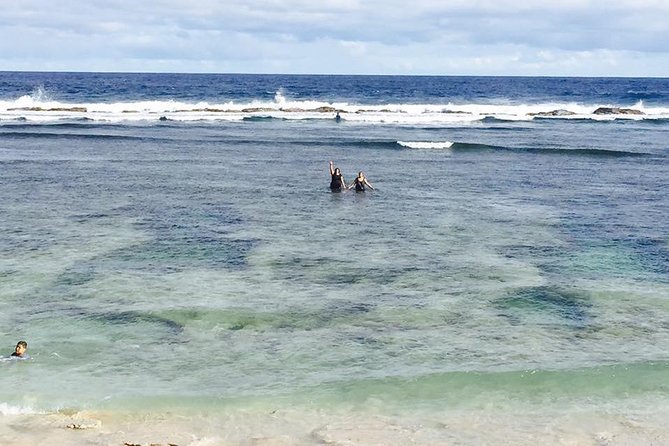
- Anahulu Cave includes a freshwater swim: You have about an hour here, and the cave pool is the tour’s main hands-on activity.
- The tour covers both royal Tonga and ancient Tonga: The Royal Palace, Royal Tombs, Lapaha’s langi, and Ha’amonga’a Maui give the day a strong historical shape.
- The blowholes are a short but memorable coastal stop: Mapu’a ‘a Vaea stretches along a rugged section of coast where waves shoot through openings in the rock.
- Most stops are viewed from outside: The palace, royal burial grounds, and some historic sites are sacred or protected, so expect signs, fences, and brief explanations rather than indoor visits.
- Pack for water and rough ground: Reef shoes, a towel, sunscreen, and drinking water are sensible choices.
- The vehicle matters: A previous tour used a small minivan for six passengers and a guide, so ask about the vehicle if space and clear commentary are important to you.
A five-hour loop through Tongatapu
This is not a slow, single-site excursion. It is an island sampler, built to show you as much of Tongatapu as possible in one half-day. The timing is tight, but that is also the value. For $150 per person, you are paying for transport around a spread-out island, a local guide, hotel or port pickup, and admission to Anahulu Cave.
The day starts from Teta Tours at the corner of Wellington and Railway Road in Nuku’alofa, though pickup is offered and the final drop-off can be wherever you want in Nuku’alofa. Port pickup is useful if you are visiting Tonga from a cruise ship and want a ready-made island plan rather than arranging several separate rides.
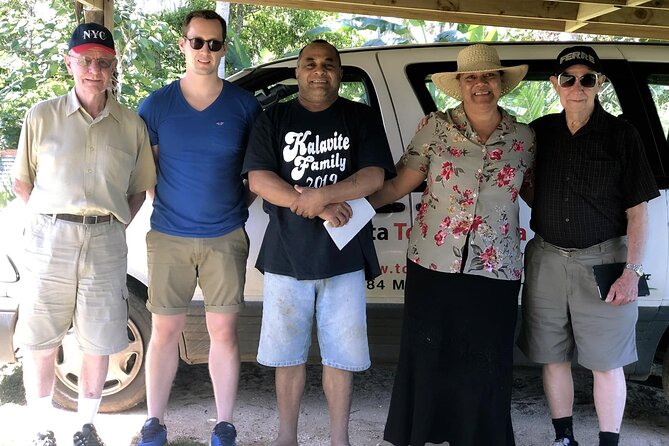
The tour is listed for a maximum of 250 people, but the actual vehicle experience can be much smaller. One reported outing used a minivan with six passengers and a guide. That sounds intimate on paper, but a small cabin can feel tight, and people in the rear may struggle to hear. If the guide is not present and a newer driver handles the commentary, the experience can become more about transport than interpretation. It is worth confirming who will guide your departure.
More Island Tours in Tonga:
- See Hear and Experience Full Island tour
★ 5.0 · 17 reviews - Tonga Holiday V Island Tours – Fixed Prices BEST VALUE
★ 4.0 · 10 reviews - 5 Hours Tahiti Island Tour – West and East Coast
★ 5.0 · 1,020 reviews
Royal Tonga at the palace and tombs
The Royal Palace is the first stop. Built in 1867, it remains the official residence of Tonga’s king. You view it from outside the fence, which is important to understand before you book. This is a respectful look at a working royal site, not a palace interior tour.
You have about ten minutes here. That is enough to take in the setting and hear why the site matters, but not enough for a long history lesson. I like this opening because it places modern Tongan royalty at the front of the day. You are not simply ticking off scenery. You are seeing a country where monarchy still has a visible role.
The Royal Tombs follow, also for about ten minutes. This is the burial place of the royal family and another sacred site viewed from outside the fence. Keep your expectations modest. The value lies in the cultural context and the chance to see how royal life and death are marked in Tonga, not in entering the grounds.
The Langafonua Handicraft Centre and Gallery gives the morning a more practical, local turn. It displays traditional Tongan handicraft and woven fine arts, with items available in the centre. Ten minutes is brief, so you may need to choose between looking closely and shopping. Still, this is one of the better places to see the skill behind Tonga’s woven work rather than only hearing about tradition in the abstract.
Next comes Talamahu Markets, Nuku’alofa’s main hub for fresh produce. The market is especially busy on Saturday mornings. The planned stop is only ten minutes, so do not expect a full market visit, a long breakfast, and relaxed browsing all at once. If your schedule falls on a Saturday, you should find the atmosphere more active, but the short timing may limit what you can do.
The three-headed coconut and Tonga’s unusual stories
The stop at the three-headed coconut is quick, but it adds a bit of odd local character to the route. The tour presents it as a unique feature associated with Tonga. You will likely spend more time hearing the story and taking a look than exploring a formal attraction.
This kind of stop works best if you enjoy unusual details and local stories. It may feel less important if you prefer major monuments and long scenic pauses. On a packed island circuit, though, a strange little sight can be welcome.
Pacific force at Mapu’a ‘a Vaea Blowholes
At Houma, Mapu’a ‘a Vaea Blowholes bring you to the coast for about fifteen minutes. The site runs along a long stretch of rocky shoreline where waves force water through openings in the rock. The result can be powerful, noisy, and very dependent on the sea.
This is a good place for sturdy shoes and care near wet surfaces. You do not need a long walk to understand the appeal. The coast supplies the action, and your job is to watch the water, listen for the pressure beneath the rock, and keep a sensible distance from the edge.
The short visit is one of the tour’s trade-offs. You get a clear taste of the site, but not much time to wait for the biggest burst or enjoy the coast at your own pace. If the sea is lively, fifteen minutes may feel frustratingly short. If conditions are subdued, the quick stop may feel about right.
A few more Tonga half days to weigh up
- Exclusive Tour of Tongatapu
★ 5.0 · 123 reviews - Tongatapu: 3-Hour East Coast and Anahulu Cave Tour
★ 4.1 · 61 reviews - Tongatapu: 3-Hour West Coast Scenic Tour
★ 3.7 · 29 reviews - 3-Hour Tongatapu East Coast and Anahulu Cave Tour
★ 4.0 · 21 reviews
Tsunami Rock and the fruit bats of Kolovai
Tsunami Rock is a ten-metre boulder sitting about 200 metres from the coast. It is said to have been carried inland by a massive tsunami, estimated at up to 35 metres high. The rock’s position makes the story easy to picture: a huge piece of stone, far from the shore, with a violent explanation for how it arrived.
You have about ten minutes here. The stop is mainly visual, but it gives you a sense of Tongatapu’s exposure to the Pacific and the forces that have shaped the island. It is also a useful reminder that the island’s story is not only royal and ceremonial. Natural disasters have left their own marks.
At Kolovai, the tour visits a flying fox sanctuary. Hundreds of fruit bats live around the village, and they appear in Tongan song and legend. The bats are described as harmless and often still, which makes this a very different wildlife stop from a zoo visit or a fast-moving animal encounter.
Again, allow ten minutes. Look up into the trees and listen to the guide’s explanation. You may find the bats easier to appreciate when you know their place in local culture. This is a good stop for anyone who enjoys wildlife with a strong connection to folklore.
European landing sites and Tongan history
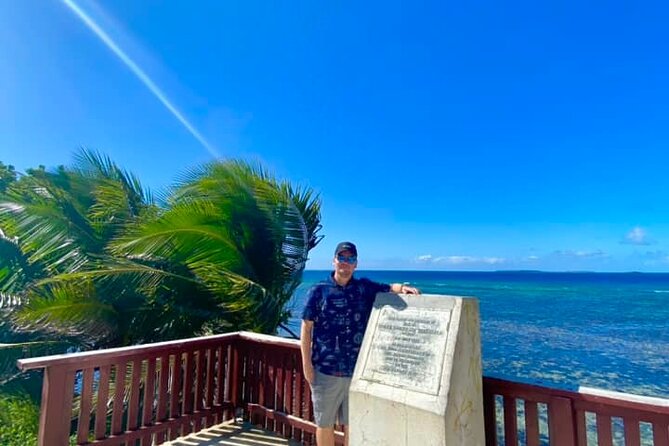
At the Abel Tasman Landing Site on Tongatapu’s northern tip, an information sign explains the first encounter involving the Dutch explorer’s crew. A plaque marks the location. The stop lasts about ten minutes, so you will have time to read the sign and take in the setting, but not much more.
Captain Cook’s Landing Place follows with another ten-minute visit. Cook came ashore in 1777 to visit Pau, the Tui Tonga, during the presentation of the first fruits known as ‘Inasi. The site is valuable because it places European exploration within an existing Tongan political and ceremonial world.
I appreciate this sequence because it avoids presenting the island only through European names. The landing sites matter, but they make more sense when placed beside Tonga’s own rulers, rituals, burial sites, and monuments. You get a quick introduction to contact between cultures without losing the Tongan setting.
Lapaha’s royal tombs and the Ha’amonga’a Maui trilithon
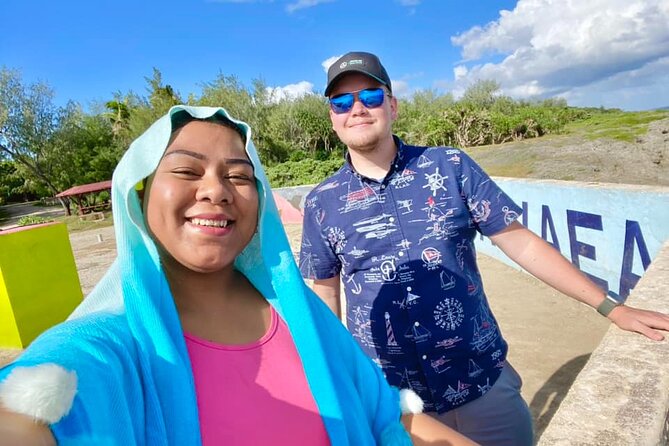
The Ancient Royal Tombs of Lapaha are large rectangular earthen burial mounds connected with the Tui Tonga dynasty. Their terraced sides are faced with cut limestone slabs, and tradition identifies the langi as burial places for the Tongan ruling class.
You have about fifteen minutes here. This is a stop where a guide adds real value, because the mounds may not immediately explain themselves. Look for the shape of the terraces and the stonework. The site is less about a single dramatic object than about understanding how power was marked and remembered.
The Ha’amonga’a Maui Trilithon is the historical high point for many people on the route. Located near Niutoua, this great stone structure dates to the 13th century and is associated with Tui Tonga Tuitatui. It is often compared with Stonehenge, though the comparison should not erase its specifically Tongan meaning.
The tour allows fifteen minutes. That is enough to stand before the stones, take photographs, and hear the main story. It is not enough for a long archaeological discussion. I would pay close attention here, since this is one of the places where the island’s ancient past becomes physically clear.
Nearby in Niutoua is Maka Fa’akinanga, or the leaning-against-the-rock stone. It is made from the same type of stone as the trilithon and sits about 100 metres away. The planned stop is ten minutes. Seeing the two sites together helps you understand that Ha’amonga’a Maui is part of a wider ceremonial area, not an isolated curiosity.
Maui’s boulders and the Anahulu Cave swim
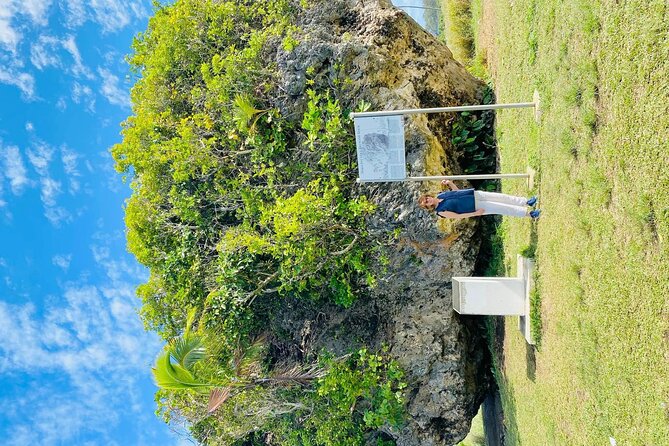
Makatolo a Maui consists of giant throwing boulders near Anahulu Cave in Haveluliku Village. The local legend says Maui threw the stones because ancient giant chickens disturbed his sleep. It is a short five-minute stop, so you are getting a story and a quick look, not a full visit.
Then comes the tour’s main activity: Anahulu Cave. An accredited guide accompanies you inside, where rock formations lead to a freshwater pool. The tour allows one hour here, and entry is included in the price.
This is the point where practical packing matters most. Bring reef shoes for footing, a towel, sunscreen, and water. The supplied advice also suggests bringing your own snorkelling gear for Anahulu Beach, although the cave itself is the main included water experience. Ask your guide about conditions and take care on wet rock.
The cave swim gives the itinerary a welcome change of pace. Most of the day involves looking, listening, and taking photographs. Here, you can cool off in fresh water and spend a longer period in one place. If you want an active element, this is the strongest reason to choose this tour.
You should also judge the cave against your own fitness. The tour asks for a moderate physical fitness level. It is not presented as a difficult expedition, but you are entering a cave and moving around a natural swimming area. If uneven ground or water is a concern, ask for more detail before paying.
A quiet finish at Anahulu Beach
Anahulu Beach is the final major stop. It is described as a quiet beach away from city noise, with a private-like feel and few other people. The planned visit lasts thirty minutes, giving you more time here than at most of the cultural stops.
This is a useful ending after the cave. You can slow down, dry off, and enjoy the coast without trying to absorb another monument or historical date. Bring your own snorkelling gear if you want to explore the water, since it is not listed as supplied.
Food and drinks are not included, so carry water and plan accordingly. The tour information does not provide a meal stop, and the tight schedule leaves little room to search for food on the way. Your driver can drop you anywhere in Nuku’alofa at the end, which is handy if you want to continue sightseeing or return to your hotel.
Is $150 a fair price?
At $150 per person, this is not a cheap short sightseeing ride. It is a full island circuit with many stops, hotel or port pickup, a local guide, and Anahulu Cave admission. The value improves if you are in Tonga for a limited time, do not have a rental car, or want one booking to cover the island’s major sights.
The price is less attractive if you prefer slow visits, quiet photography, or long time at one or two sites. You may feel hurried at the palace, markets, blowholes, and ancient monuments. The tour’s strength is breadth, not depth.
The 4.3 rating from three published reviews suggests a generally positive but not flawless experience. The strongest praise focuses on the complete day and the need to come prepared with reef shoes, a towel, sunscreen, and water. A clear warning concerns the minivan size and the possibility that commentary may be hard to hear from the rear.
Who should book this Tongatapu tour?
I would choose this tour if you want a broad introduction to Tonga in one half-day, especially if you are arriving by ship or staying in Nuku’alofa without independent transport. It suits curious first-time visitors who want royal sites, ancient monuments, coastal scenery, wildlife, and a cave swim rather than a single beach outing.
You should think twice if you need spacious transport, a slow pace, or detailed guiding at every stop. Ask ahead about the vehicle, group size, and which guide will accompany you. Also remember that smoking is not allowed, and you should only board the Teta Tours van identified for your booking.
Book it if the combination of Ha’amonga’a Maui, the blowholes, and Anahulu Cave sounds like your ideal day and you are comfortable with short stops. Skip it if you would rather spend the whole day at Anahulu Beach or explore fewer sites at a gentler pace.
FAQ
How long does the Tongatapu Island Tour last?
The tour lasts approximately five hours. Individual stops range from five to fifteen minutes, while Anahulu Cave receives about one hour and Anahulu Beach about thirty minutes.
Is hotel or port pickup included?
Yes. Hotel pickup and drop-off are included, and port pickup is also offered. The stated meeting point is Teta Tours at the corner of Wellington and Railway Road in Nuku’alofa.
Is entry to Anahulu Cave included?
Yes. The entry fee into Anahulu Cave is included, and an accredited guide accompanies you inside.
Should I bring swimming equipment?
Bring reef shoes, a towel, sunscreen, and water. You are also advised to bring your own snorkelling gear for Anahulu Beach.
Are food and drinks included?
No. Food and drinks are not included in the tour price.
What happens if I need to cancel?
You can receive a full refund if you cancel at least 24 hours before the experience starts. Cancellations or changes made less than 24 hours in advance are not accepted for a refund.
Just added around Tonga
- Tonga Holiday V Island Tours – Fixed Prices BEST VALUE★ 4.0 · 10 reviews
- See Hear and Experience Full Island tour★ 5.0 · 17 reviews
- Other side of heaven Eco friendly snorkeling adventure★ 4.5 · 4 reviews
- Nuku’alofa Shore Excursion: West Coast Scenic Tour★ 3.5 · 3 reviews
- Airport Transfers from Fua’amotu International and Domestic Airport★ 5.0 · 5 reviews
- Ancient Tonga Cultur Tour 2hr Full Culture Tour★ 5.0 · 10 reviews
- 3-Hour Tongatapu West Coast Scenic Tour★ 4.0 · 7 reviews
- Shore Excursion: 3-Hour Tongatapu East Coast and Anahulu Cave Tour★ 3.5 · 13 reviews
Island Tours, compared.
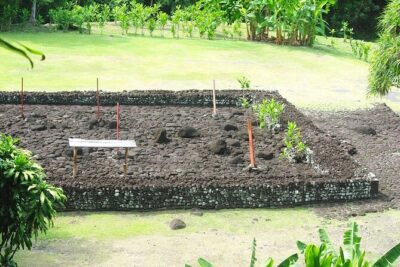
5 Hours Tahiti Island Tour – West and East Coast
Read our review →
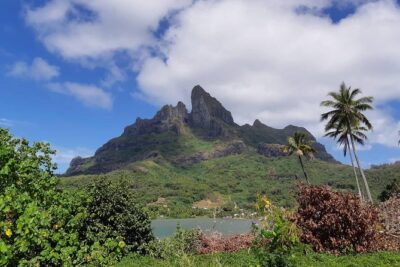
Island Tour & Getaway on the Bora Bora Mountains by Quad / ATV
Read our review →

Browse the lists this tour appears in